Standing desks have moved from a niche wellness trend to a mainstream office furniture category over the past few years. But before replacing your entire floor of traditional desks, it’s worth understanding what standing desks actually deliver — and where traditional desks still make more practical sense, especially in Indian office budgets and layouts.
What Is a Standing Desk?
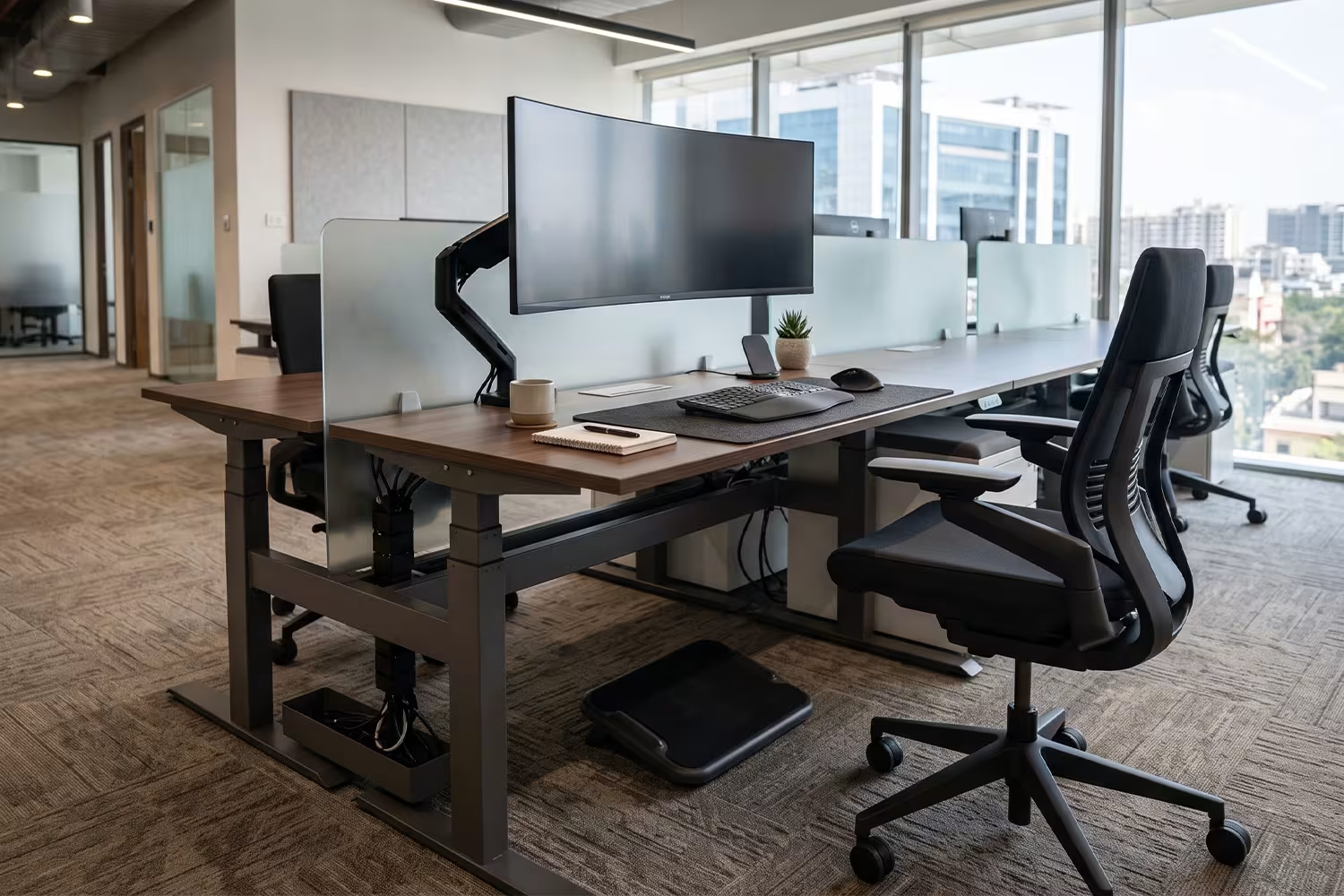
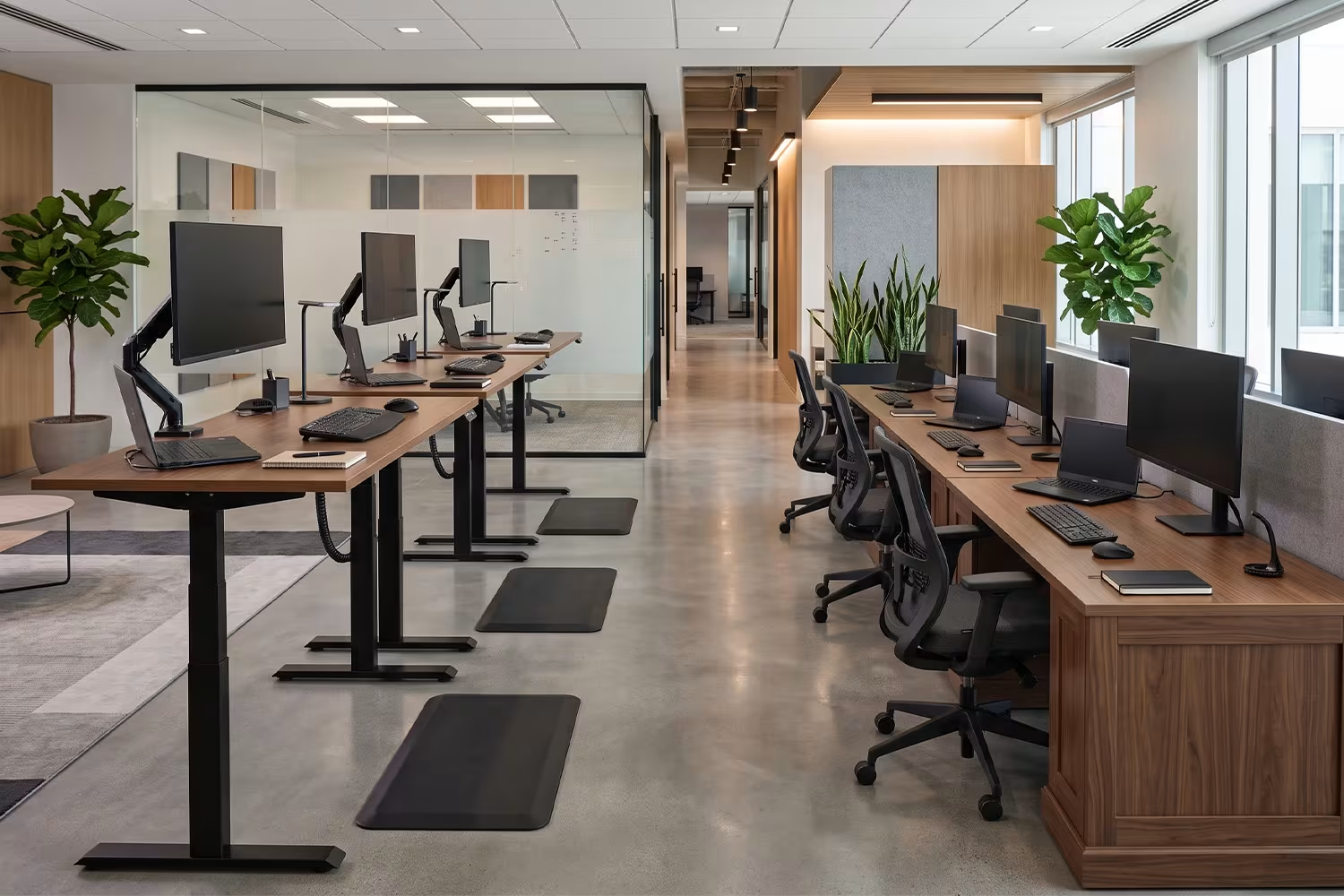
move between sitting and standing heights, usually through a manual crank, gas-lift, or electric motor mechanism. The core idea is simple: reduce the number of continuous hours spent seated by making it easy to alternate positions throughout the day.
What Is a Traditional Desk?
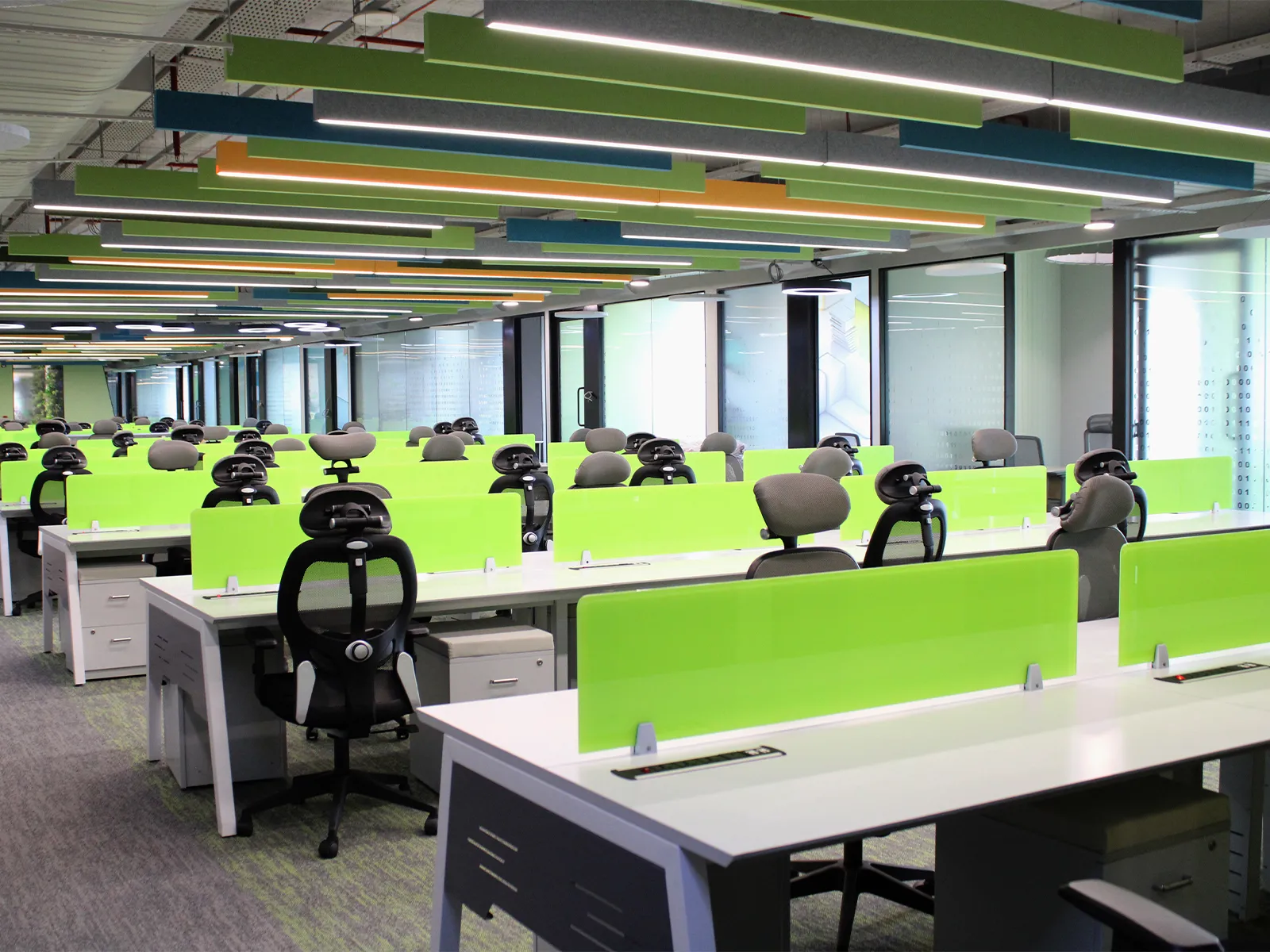
A traditional desk is fixed at a single, standard sitting height — typically designed to suit average seated posture. It’s the default furniture choice across most Indian offices, largely because it’s simpler to manufacture, more affordable, and requires no adjustment mechanism.
The Real Benefits of Standing Desks
- Reduced prolonged sitting — alternating between sitting and standing can ease lower back strain that builds up over long desk hours
- Improved energy and focus for some users — many report feeling more alert during standing intervals, though this varies by individual
- Flexibility for shared or hot-desk setups — adjustable height accommodates different employee heights without separate furniture
- Better long-term ergonomic fit — particularly useful in hybrid offices where desks are shared across people of different builds
Where Traditional Desks Still Win
- Lower upfront cost — standing desks, especially electric models, carry a meaningfully higher price per unit
- Simpler maintenance — no motors, cranks, or height mechanisms to eventually repair
- Sufficient for most desk-based roles — if a chair and desk setup is already ergonomically sound, the added benefit of standing may be marginal for many employees
- Faster bulk procurement — simpler desks are easier to source and install at scale for larger offices
Comparison Table
Factor | Standing Desk | Traditional Desk |
|---|---|---|
Upfront cost | Higher | Lower |
Health benefit | Reduces prolonged sitting | Neutral (depends on chair/posture) |
Maintenance | Moderate (mechanism wear) | Minimal |
Bulk procurement | Costlier at scale | Easier, cheaper at scale |
Best for | Hybrid/wellness-focused offices | Budget-conscious, high-volume setups |
Is It Worth It for Your Office?
Worth considering if: your office already has solid ergonomic seating in place and you’re looking for an additional wellness investment, especially for roles involving very long consecutive desk hours.
Probably not the priority if: your budget is still going toward basic ergonomic essentials — a good chair and properly sized desk will likely deliver more comfort improvement per rupee spent than switching to standing desks across the board.
A middle-ground approach that works well for many Indian offices: install a smaller number of standing desks in shared or flexible zones, rather than replacing every desk on the floor. This lets employees who want the option use it, without the cost of a full office-wide switch.
FAQ
Do standing desks actually improve health outcomes?
Standing desks can help reduce the health risks associated with prolonged uninterrupted sitting, though the overall benefit depends on actually alternating between sitting and standing rather than standing all day.
Are standing desks worth the extra cost for a growing startup?
For most early-stage offices, prioritizing ergonomic chairs and correctly sized traditional desks typically delivers more value before standing desks become a priority investment.
Can a traditional desk be converted into a standing setup?
Yes — standalone desktop risers can convert a traditional desk into a sit-stand setup without replacing the whole desk, which is a lower-cost way to test the concept before a full switch.
Exploring desk options for your office? Browse Polestar’s Workstation range, including height-adjustable and traditional desk options.